
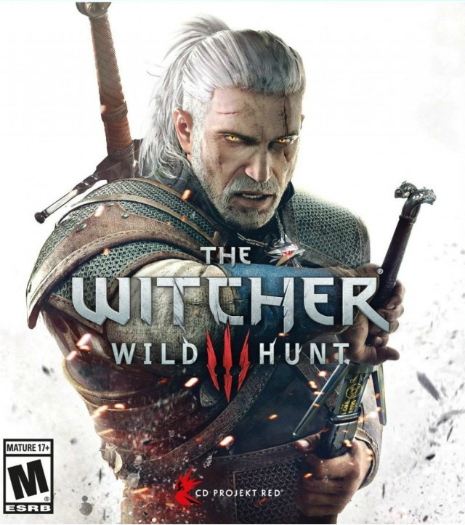
The Witcher games have always been very odd for me. Fantasy RPGs tend to stick with a particular tried-and-true formula, yet the series has made an effort to be distinctly different from everything that might make it similar to Dragon Age or The Elder Scrolls. Some of the decisions - like its distinct races and lore - are a welcome diversion. Yet there are some design choices which feel different for the sake of being different at best and baffling at worst.
One example is how main character Geralt doesn't cast spells, but rather, signs. It looks like a spell, it acts like a spell, but according to The Witcher it’s not a spell. Or hell, how about how a Witcher has absolutely nothing to do with witches? It’s not a male witch or a witch hunter, it’s a beast hunter.
Even all the Witcher games take pretty radical steps to differ from one another. The second game turned the point and click interface into an action RPG. The Witcher 3: Wild Hunt meanwhile, vastly increases the game’s size and scope, with a massive open world and accompanying story and exploration that come with it.
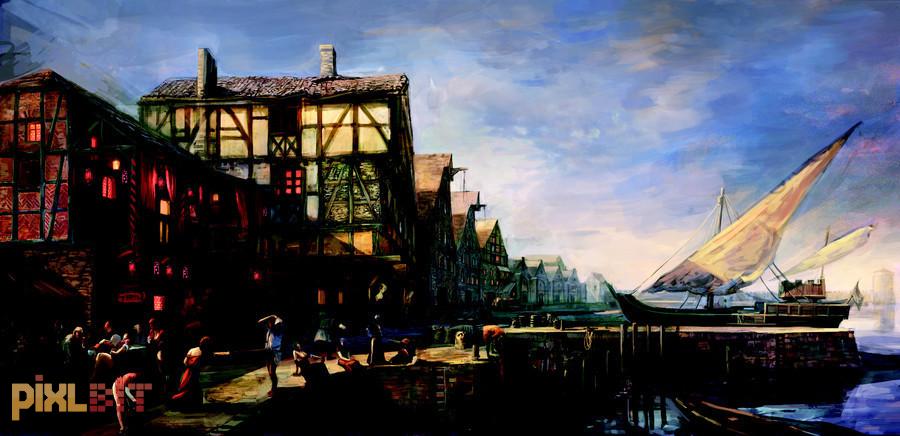
The open world works, for the most part. I didn't find it completely compelling and never became totally engrossed in it, but the differences from the standard fantasy setting were enough to hold my interest. Though I didn't explore every inch of the land, a number of large areas did pique my interest, driving me to discover what secrets they held. Upon arriving, while I was never blown away by what I found, I always felt the journey was justified
Yet unlike so many other open-world RPGs, The Witcher 3: Wild Hunt has a very compelling story. I quickly grew bored with the last two Witcher stories despite seeing plenty of potential in the moral ambiguity present. Choices were not black and white with many surprises on the actual outcome, a trait which Wild Hunt thankfully retains.
The reason for Wild Hunt’s more interesting story can be summed up with one word: Ciri. This girl is Geralt’s protégée and the introduction starts with a flashback of you training her which doubles as a tutorial. This stands as one of the best tutorials I have seen in recent years, giving a legitimately good reason to introduce the controls and mechanics while also characterizing Ciri as someone worth caring about.
As the plot develops further, it leads to a search for Ciri in the present. The game presents the aforementioned tutorial coupled with a compelling mystery as to why she disappeared as you follow up on various leads. This creates a much greater motivation to push forward than the last two games. The game is not just a search for Ciri, however, finding her leads to a grand, epic battle. The game spends the perfect amount of time exciting the player for this battle, alluding to it occasionally while searching for her, but not dwelling on it for too long.
The area where the story stumbles are the objectives, however. Far too many of these are nothing more than glorified fetch quests, with sub-objective on top of sub-objective. This game takes more from Shenmue than Skyrim without retaining many of the finer qualities of the former. For instance, following up on one lead on Ciri led me to an old friend of Geralt’s. She led me to a few people, who had leads on a guy’s location who may have information on her. I had to find what felt like twenty people before I could get the information I needed to proceed.
The issue with these objectives is that rather than expanding the world, stories, and characters, they are just padding the play time. I would roll my eyes on how little information every lead I had would provide to the point where information that legitimately moved the plot forward at one point felt like an oasis in a desert. Quests would too often feel tedious and repetitive because of this, which severely hurt the story.
Geralt is also not exactly the best character for this kind of RPG. His main attributes are his stoicism and lack of emotion, which does not work well for the vast majority of his conversations. The lack of emotion does not even make that much sense when he constantly tells certain characters how much he cares about them. This may be further elaborated in the game’s codex, but that feels like too crucial a piece of information to not be integrated well into the story.
To make matters worse, the game’s moral choice system hurts the one aspect of him they could have fleshed out: his morality. They just do not mesh well with this kind of character. Geralt has a clearly defined personality, swaying him towards compassion or cruelty does not mesh well. It feels like an uncanny valley between a blank slate and fully developed character.
Do not get me wrong; the inclusion of moral choices is not in and of itself a bad decision. The game is not content with offering simple good or evil decisions, even removing the usual morality bar accompanied with choices. The consequences also encourage critical thought with their complexity. The Witcher 3’s choices, in a vacuum, offer what might be the best example of moral choices in gaming. The only problem is they collide with with Geralt’s characterization.
Combat remains mostly similar to the second game with a few tweaks. The core free flow style combat aping the Arkham games is intact. Geralt’s arsenal of spells, potions, and tonics, however, separate it from every other game imitating this style. The signs have a greater sense of impact than before, with each feeling very distinct and useful with the exception of the trapping spell. It is a good spell in theory, I just found it far less useful than the shield, flames, force push, and stun - each of which I was rotating between very regularly.
The tonics and potions meanwhile, feel like they’re mostly made for the harder playthroughs. I found just a single instance where I needed to find a potion to defeat an enemy, and even then I feel I could have still grinded my way to beating it had I not wanted to finish said quest as quickly as possible.
What really holds combat back, however, is the environment design. Out in the open fields you should mostly be fine save the tree or cliff, but good luck indoors. So many times a fight would break out in a bar and I’d have no room to move because of all the chairs and tables around, yet the combat was built around Geralt being able move freely from one opponent to another. These areas feel like they are better suited for an RPG, not an action game.
Two aspects that initially were one of the combat’s biggest strengths turned out to be not so great. The first is the game’s aggressive difficulty. Assuming Geralt is not overleveled, enemies will take enormous chunks of health out of him with each blow, making dodging, parrying, sign casting, and healing item management crucial to your success. This initially blended well with the second: how encounters are vastly changed depending on the enemy count rather than just adding more targets. Caution and focus are far more vital than your average game against large groups, adding a lot of weight to the combat.
When Geralt fidgets because some decorative item was standing in his way, however, these two combine to make an annoyingly nasty scenario. Enemies will relentlessly attack Geralt, often not giving any time to recover and since he cannot take that many blows, will cause him to get hurt. Grinding can remove this, but that causes the encounters which do work to suddenly feel overly easy and dull. When I have to pick between the occasional boredom or frustration, there’s a serious problem.
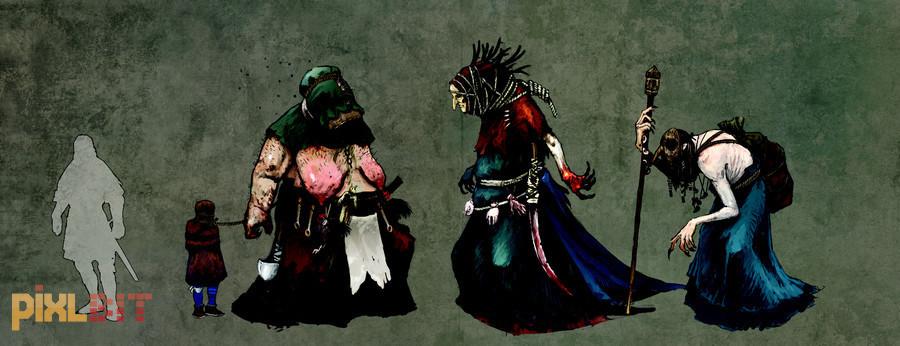
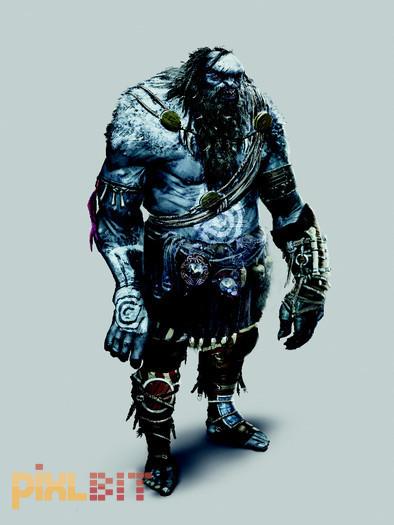
The one exception here would be the various mystical beasts you can hunt down and track, by far the highlight of the game. Using your Witcher senses to track them down creates a great amount of build-up to the fight against the beast. Then once it is trapped, monsters have varied attacks that are both fun and interesting to do battle with, two things that were lacking with the human enemies. As someone who was not compelled to complete nearly every other sidequest - even the story heavy ones - I did not miss any chance at a new Witcher contract.
The Witcher 3: Wild Hunt stands as a flawed, but noble effort on creating the next grand RPG epic. There is a massive amount of content to this game, appealing to a wide array of RPG fans. Want a compelling tale you won’t soon forget? Or a game that will offer a massive, interesting world world with enough content to keep you busy for months? Or fun combat with just enough unique mechanics to stand out? No matter what you want, The Witcher 3 will have you covered as the jack of all trades, but master of none.

i want to play this. It's interesting to hear your more... measured reaction to it than we got from most gaming magazines.
Man, it looks like you didn't care much for this game. I'm surprised your score is so high. 
I actually did enjoy it, but feel every aspect of it had a certain number of flaws to it I needed to address. Overall, the story, exploration and combat are each good, not great.
I thought your review focused a lot on what you didn't like. I did understand your complaints though. They just didn't bother me that much.
What did you think of the ending? I thought it was a bit of a let down. I plan to play through the game again real soon.
The main reason is I felt I needed to elaborate on my issues more than what I enjoyed. I can't go in too much detail on what I enjoyed on the plot or choices, yet my issues with them were easy to elaborate without giving spoilers. As for combat, explaining what worked was simple. The difficulty spikes or area design, on the other hand, needed more focus on why they didn't work as well.
As for the ending, I thought it worked alright for what it was. It's no Last of Us end, but after 2012's double hit of Mass Effect 3 and Assassin's Creed 3, I have a really hard time being let down by endings anymore.
No ending disappoints me more than Mass Effect 3. I recently got the Last of Us. Hopefully I can get to it this year.
I actually got into the difficulty spikes. It made me prepare for battles and it felt good beating enemies that were at a higher level than myself. My wife didn't like it and she would grind to higher levels. Because I defeated high level enemies, I leveled up faster and finished the game before she did. I also became a better fighter because the hard battles demanded it from me.