
Up until Lies of P released, I thought it was impossible for anybody not named FromSoftware to make a great Souls-like. We’ve certainly seen plenty of teams adapt the formula to 2D successfully, but despite the similarities, those titles feel more like variants on the classic Metroidvania formula than a proper Souls-styled game. False Hero, though, leaves no question where it draws influence - this 3D Souls-like, the product of a single developer, is imbued with everything that made the Souls series great. It even manages to add its own twist to the formula, creating its own identity in the process.
At first glance, just about everything in False Hero seems to match up to its influences. There are the equivalent of bonfires (bloodsprings) strewn about the land, of which you can use to fast travel around. When you kill enemies, you’ll receive the game’s equivalent of souls, knowledge points. You have a flask for refilling health, with a total of 4 uses available and a recent patch has allowed you to expand your flask usages with flask shards, up to 6 uses total.
You’re confronted with a variety of enemies, each of which won’t respawn until you rest at a bloodspring and you also have a stamina meter, which is depleted specifically when you use your dash. But this stamina bar is the starting point for the differences between False Hero and its inspirations.
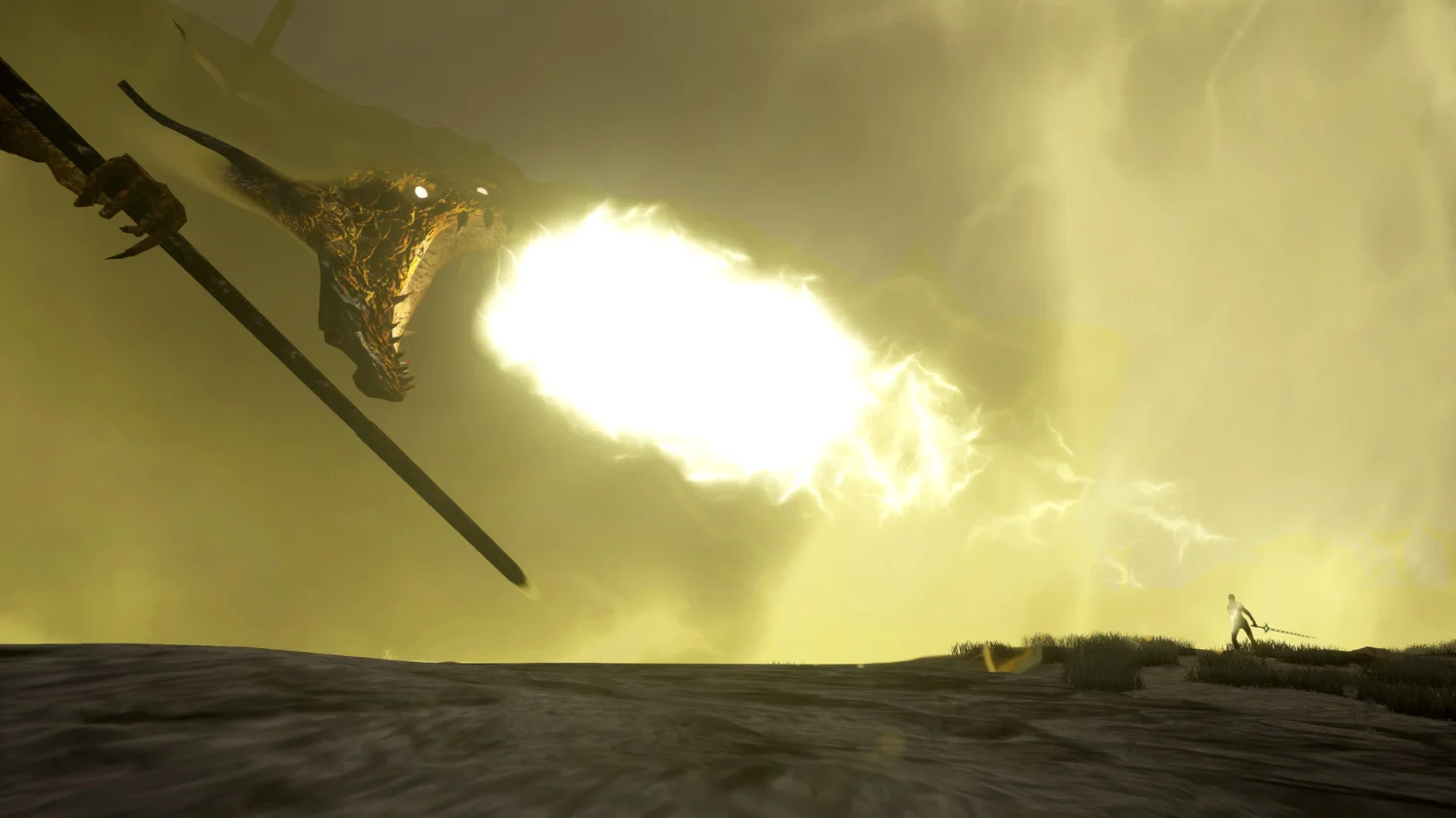
False Hero’s base sword attack doesn’t use the stamina meter and actually serves a totally different purpose than you would expect. Below your stamina bar is your focus bar - which, though in purple, might have you believe it’s equivalent to the magic bar from the Souls games, but also functions differently offering tight interplay with your sword mechanics.
As you kill enemies in False Hero, they have the potential to drop Insight. When you’ve collected the requisite amount of Insight of that particular enemy, you will earn their combat art. You can then equip up-to-five of these combat arts to the four shoulder buttons, as well as Y/Triangle, and they are meant to be your true means of attacking enemies, rather than your sword.
While, yes, the sword does inflict damage, it’s primarily used to refill your focus bar - it's not an effective weapon for defeating most enemies. When you attack with your combat arts, they will drain your focus bar. If they happen to connect with an enemy, you may receive some or most of your focus back, but a whiff will leave you vulnerable as you will need to land an attack with your sword to refill your bar.
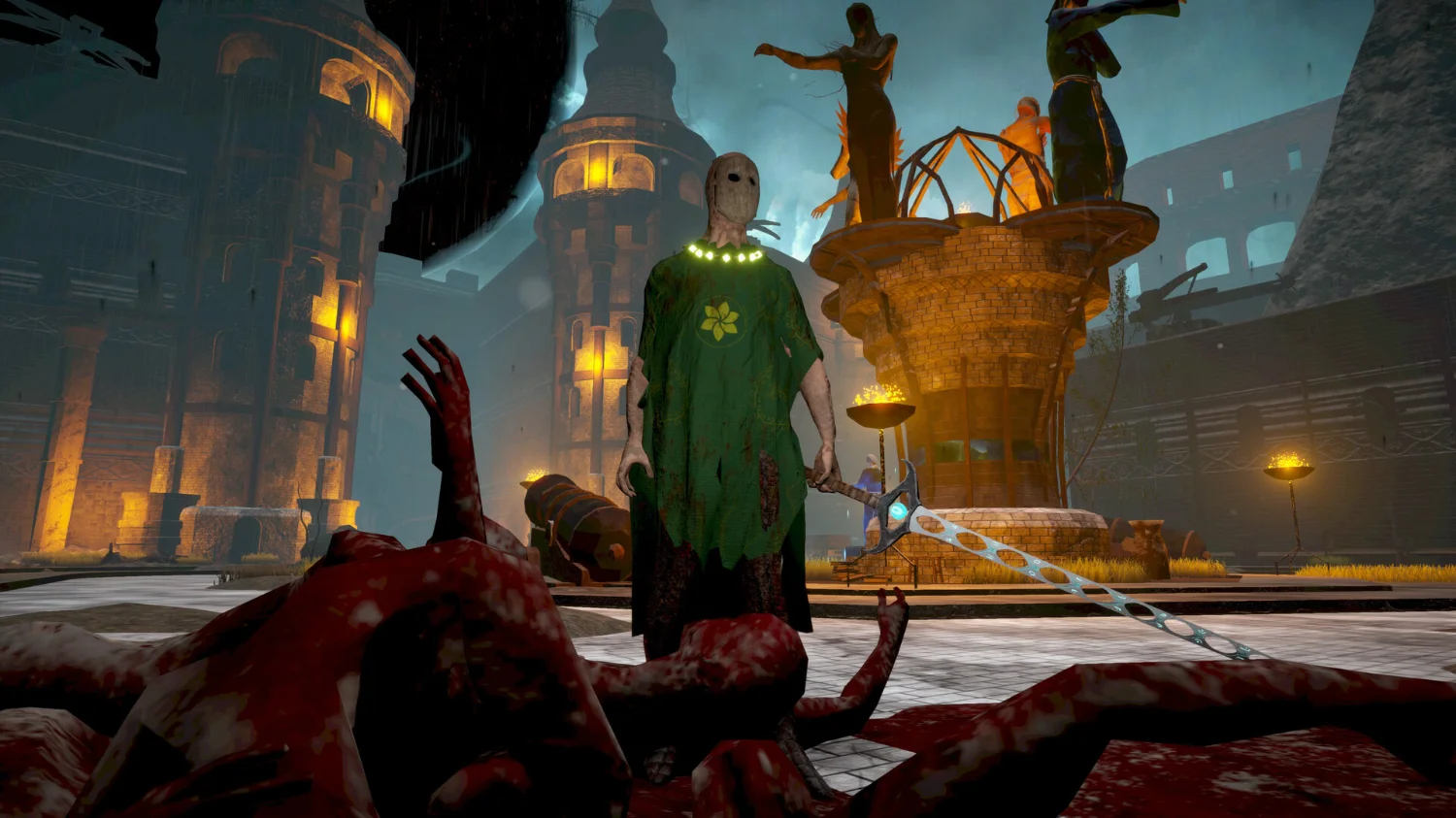
Borrowing from Sekiro and Armored Core, attacks all build up your enemy’s stagger meter. If you fill that meter, the enemy will flinch and remain vulnerable for follow-up attacks. As such, it’s made clear early on that your goal is to stack these combat arts back-to-back to keep the pressure on the enemies. This means that you’ll be mapping your favorite combat arts in such a way that you can easily chain them into combos to inflict big damage as quickly as possible.
Also, the knowledge points you gain from defeating enemies are specifically used to upgrade these combat arts along with different types of ink, which you will collect throughout your travels. It doesn’t take long to assemble a healthy stable of combat arts, some of the earliest of which I found myself using throughout the game.
Sekiro’s Mikiri Counter also seems to have been borrowed and when enemies get a red aura around them while performing an attack, a dash into them will parry them, leaving them vulnerable to a flurry of attacks. Enemies later in the game will perform multiple red attacks, forcing you to perform up-to-three in a row to put them in a staggered state. This doesn’t leave the opening for a critical attack, as seen in the Souls games, but performing the parry will fill your focus bar and grant you enough time to unleash a full combat art combo, which helps in whittling down the fairly large health bars of the boss enemies.
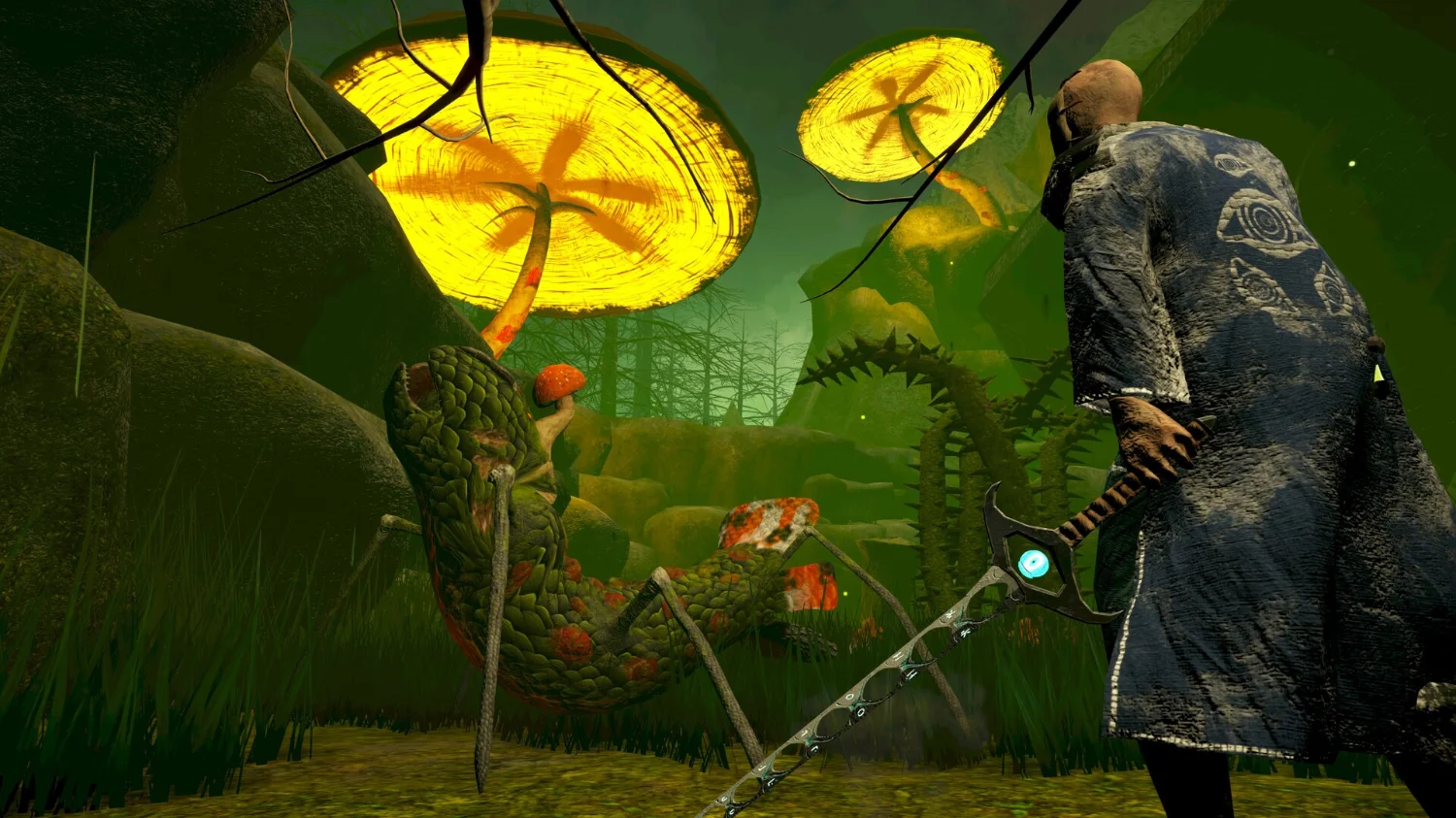
False Hero seems to also take influence from the Zelda series. Rather than focusing entirely on combat, it’s not uncommon to find environmental puzzles to complete across the different world biomes. Sometimes you’ll be activating a windmill to blow a platform or shifting the flow of water to reach a key target. It’s nice to get some reprieve from the combat and exploration and it provides a little bit more to distinguish it from the Souls games.
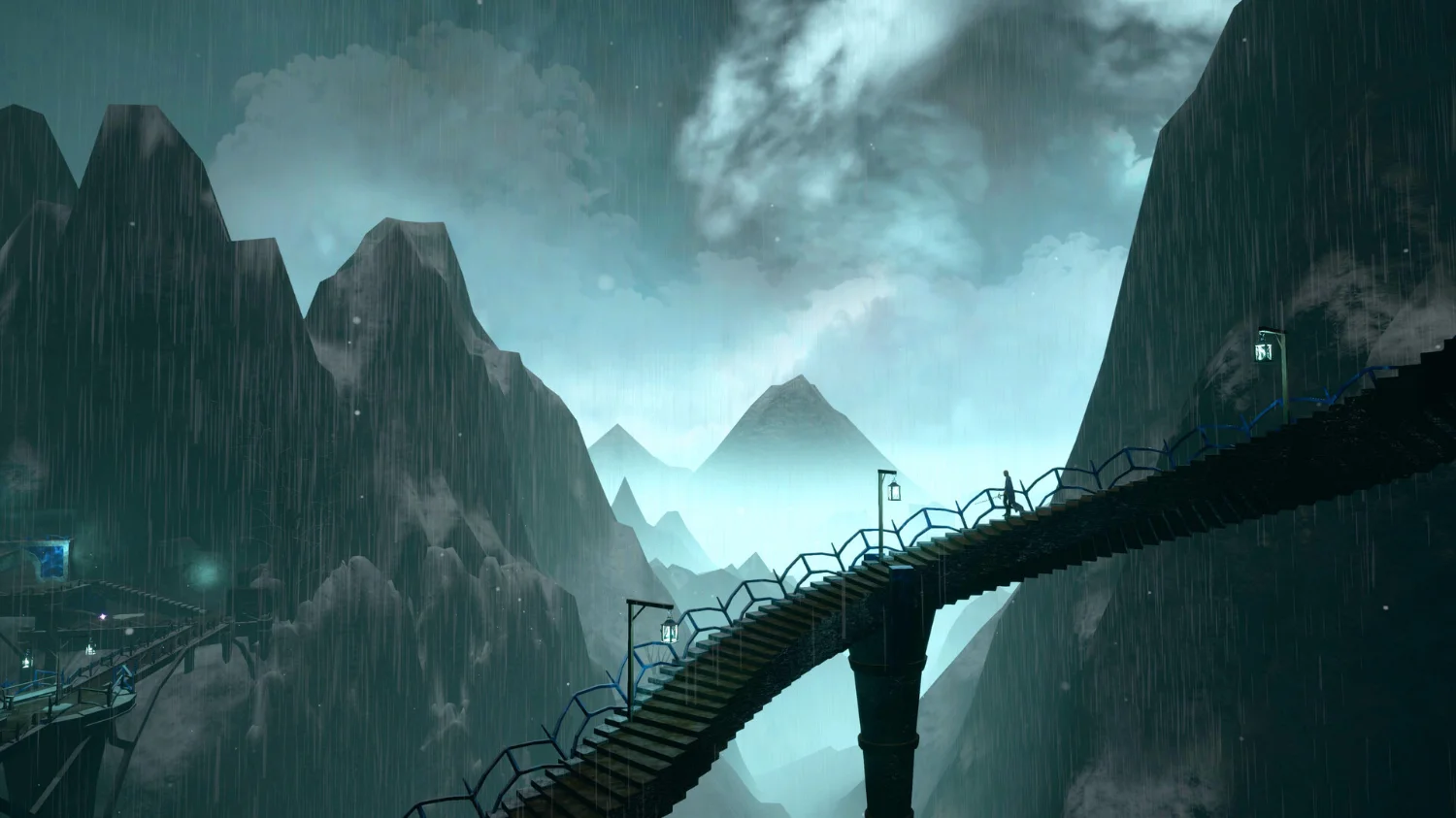
However, one of the game’s best features is its world design, which clearly evokes the original Dark Souls. The game is ultimately segmented out into four unique areas, but within each of these expansive locales, the world is constantly looping back in on itself. You’ll frequently open shortcuts back to earlier bloodsprings, which always feels great and helps make the world feel more like a cohesive space.
The music and sound design are equally great, providing for memorable, moody tunes and visceral sound effects and voice acting that makes this world come to life. And the PlayStation 1-style graphics also serve the game well - while the art direction could never match up to the Souls games, this lo-fi approach really allows for effective expression on the surely limited budget this game was built with. It reminds me of Pseudoregalia, which I also really loved from a visual perspective.
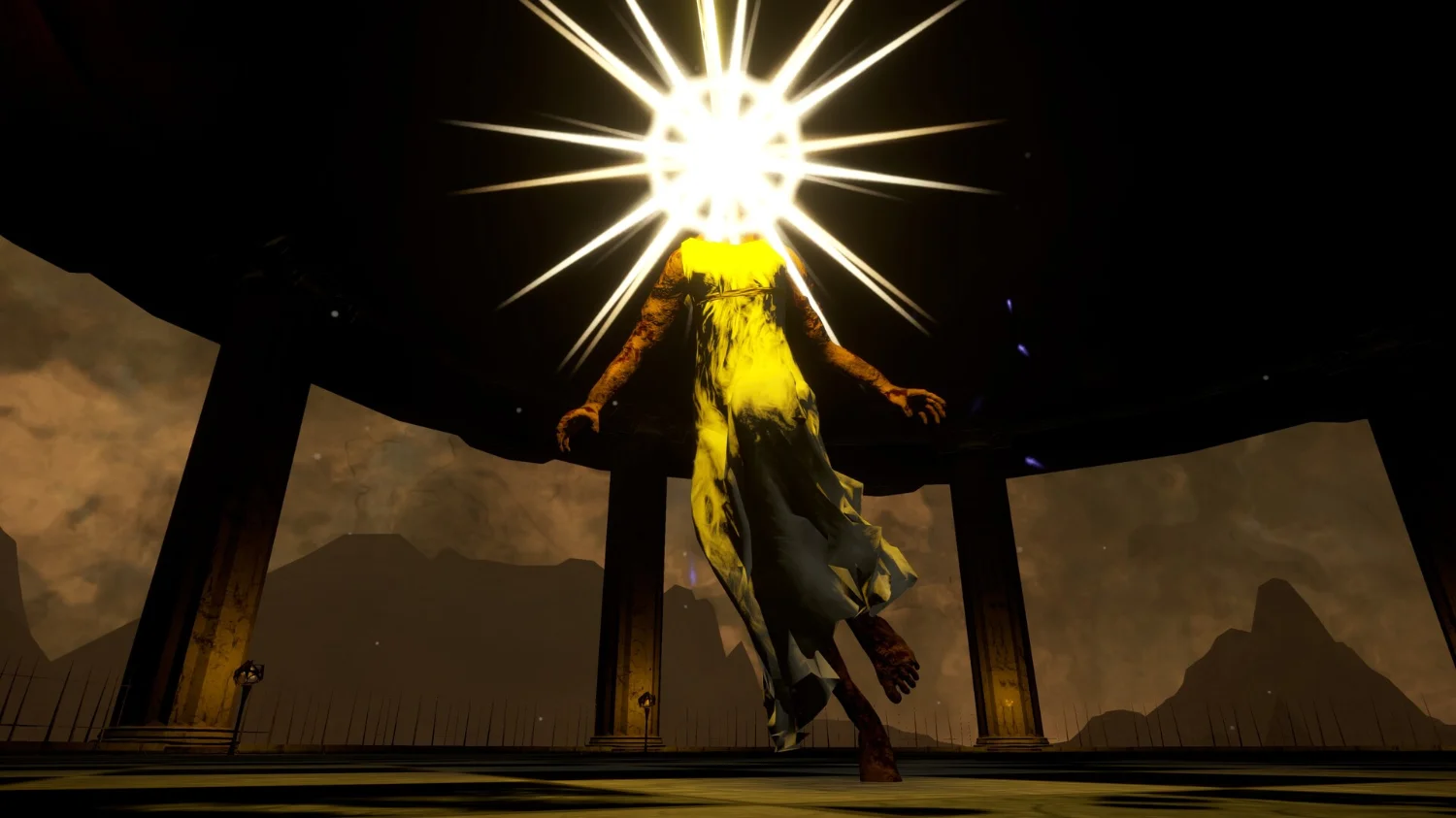
Frankly, I only really have a few small issues with False Hero. Most importantly, the end game bosses are a brutal grind. When you reach The Watcher in the third major zone of the game, the difficulty spikes pretty noticeably. Bosses start having two phases and the level of perfection needed to best these foes can become grating.
The aforementioned red moves that must be parried start coming out faster and more furiously and missing your parry by dodging off-center, or just being late or early means instant death on the “Recommended” difficulty setting (which, though the default, also happens to be the hardest one). I lost a lot of fights due to this and it frustrated me every time. At the time of writing, the end bosses feel over-tuned to me, though I know the developer, Torchlight Games, has been tweaking things since release.
Starting with The Watcher, every boss fight seemed to take me at least an hour, sometimes more, before I was victorious. This makes the last quarter of the game really drag out. Because your only defense is dodging with i-frames and the bosses are built in the image of Elden Ring with delayed attacks and big spectacle attacks, it really takes a lot of effort to nail down each and every fight.
However, this feels like a problem that likely can and will be resolved via more tweaks and patches. I’ve already watched the dev implement flask shards to help address this problem, but I do think more work still needs to be done to balance these fights out a little better.
That said, I do appreciate the challenge and I like how these fights have forced me to revisit my arsenal of combat arts and try new ones to help break through. It's satisfying to find a new combo of moves that are effective in the current battle, melting away that life bar more quickly.
When taken as a whole though, False Hero has been such an unexpected treat. I requested a review copy not expecting much, but I was quickly blown away by the game's quality. It channels the best of the Souls games, Bloodborne, and Sekiro and combines it into an experience that any fan of FromSoftware won’t want to miss.
Best of all, it’s priced at only $20, which feels more than fair for such an expansive campaign and even includes boss gauntlets a la Sekiro to give you some more replay value and a stiffer challenge when you’ve conquered the main quest. If you love the classic Souls games, you should not hesitate to add this to your library.

I definitely like the world design in this game.
The world design is one of its best features! Really cool looking and fun to explore. Plus, I think the lower difficulty settings makes it pretty accessible to just about any one.
Perfect. "accessible to any one" is exactly me, especially when talking about souls-like games. haha.