
I really love both Bayonetta games. I love their combat, style, and the character Bayonetta. Arthur Gies of Polygon liked the gameplay for Bayonetta 2, but felt the character was sexist. He knocked the game down a few points because it was sexist. Now, some of you know my opinions on Gies, but these are neither here nor there. If he differs on my opinion, I really don't care. Even if he gives a game I love a good, but not great score, then it's just his opinion.
About a month ago I started working on a blog about the Game of the Generation. Though we’ll continue to see PlayStation 3 and Xbox 360 games for a while yet (Persona 5, anyone?), a new chapter of gaming history is underway with the Wii U, PlayStation 4, and Xbox One. Obviously I never finished that blog but IGN recently posted its picks for the Top 100 games of the generation, so it seems like a good time to revisit the idea. IGN’s list is ripe for controversy, as any such list would be, but their criteria is so vague that it’s hard to know exactly how or why they put certain games where they did in the list.
My first console was a Nintendo Entertainment System – a system I purchased in 1987 from months of saving allowance, birthday money, and various bribes from my parents. My first videogame adventures were with Mario, Link, and Samus. They say the first impressions are the longest left, and I tend to agree. My first years of gaming were by far the most magical; shaping my perceptions of games and culture for years to come.
So, anyways I've recently been reading some news and stumbled upon a unique article. Someone may have already covered it here, but I find these articles and website fascinating.

When Jesse Miller, our resident features guru, asked if I would be interested in doing a Final Fantasy retrospective for the series’ 25th anniversary last year my answer was a resounding “yes!” In the months that followed, I poured all of my love and dedication into a five part series detailing the 14 core Final Fantasy games. It was a labor of love for me; no series of games has been more influential or important to me as a gamer. I’m a staunch defender of these games, even when they go into weird territory like iOS time-wasters. That doesn’t mean that I’m blind to the fact that the series isn’t what it once was, however. As excited as I am for the future of Final Fantasy, I think that the fine folks over at Square Enix need to take a good long look at where the series stands. To that end, I have 5 things that I think could help immensely as we move forward into the next generation.
As the years go by, we've seen games go from 8 and 16-bit sprites to full three dimensional models consisting of thousands of polygons, but can gaming continue advancing and innovating at the rate that it has been indefinitely? Let's start by first taking a look at Moore's Law.
The last time I blogged was a good 2 months ago as the holiday season started hitting, so I certainly have some catching up to do. Even though I was out of the blogging game for a while I was still running a guerrilla campaign in the shadows reading lots of good articles on Pixlbit, Polygon, reading blogs, leaving comments occasionally, and listening to gaming podcasts. Over at Pixlbit, editor and writer Julian Titus put together quite a passionate Final Fantasy retrospective for the 25th anniversary which he worked on for several months. If you are of the Final Fantasy persuasion you should certainly check it out, but if you're not it's still a worthwhile adventure.
Welcome to the final part of PixlBit’s comprehensive look at the Final Fantasy series. In our last installment, we went through the PlayStation 2 era, which took the series into uncharted territory, for better or worse. This time, we look at the most recent Final Fantasy games, which have gone on to become the most divisive and controversial games in the series so far. Join us as we explore the Seventh Generation years!
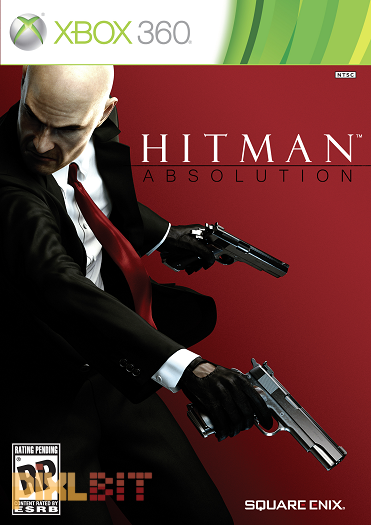
It’s hard to believe that it’s been six years since Hitman: Blood Money hit the scene. It was released in that heady time around the launch of the “seventh generation” of consoles, when it was still common to see games come out for the Xbox and PlayStation 2 alongside the Xbox 360. As such, Blood Money wasn’t technically a seventh generation game; it was designed with the PCs and consoles of 2005 and upscaled to run on the 360. That was my introduction to the series, and even though the game came across as dated by the time I got to it in 2009 I was impressed with the sheer amount of options for completing objectives in every level.
According to Wikipedia, we are in the seventh generation of the console cycle. As we all know, this generation is home of Nintendo's Wii, Sony's PlayStation 3, and Microsoft's Xbox 360. Additionally, though not a part of the seventh home console generation, this is still currently the era of the PlayStation Portable and the Nintendo DS.