
After a very long hiatus, PixlTalk is back for Episode 83. For now, you'll only be able to watch this episode on YouTube, but soon the RSS feed will be updated appropriately in order to bring all of the PixlBit podcasts together into a single feed. In this episode, Nick discusses the state of the industry after both Sony's digital-only announcement and Microsoft's huge layoffs, the games he's been playing recently, and a little bit of site information and where things are going next. Tune in to hear more in this reboot of PixlBit's original podcast!
As a late bloomer to RPGs, I was mostly ignorant of the Final Fantasy series until 1997, when that commercial for Final Fantasy VII caught my attention in all its epic CG glory. But it would be another two years before I finally saw a demo of the game in action, which sparked my love for RPGs. The point is that I missed out on Final Fantasy VI (originally titled Final Fantasy III in the US) when it was released in 1994. Fortunately, the Super NES Classic Edition's release several years back allowed the opportunity to play Square’s magnum opus of the 16-bit series. And boy, was it worth the wait.
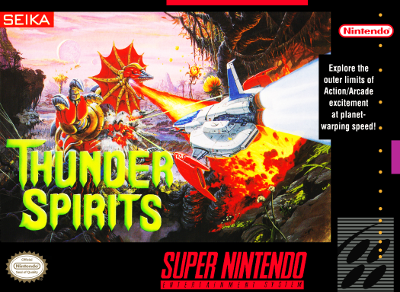
Technosoft’s Thunder Force series is rich with 2D shoot-'em-up goodness. After starting with the fifth game in the series on the PlayStation and then working my way back to Thunder Force II on the Genesis some years later, I have become obsessed with everything related to the Thunder Force series since then. One fateful day at a local game store, I stumbled upon Thunder Spirits on the Super NES. "Nah, no way it's related to the Thunder Force series. Probably just a coincidence of naming", I thought to myself. But after doing some additional research, I soon returned to that store and purchased the game. For, you see, this was no coinkydink.
If there’s ever a time I dread writing a review, it’s when my subject is a highly favored game that has received so much praise over the years that it’s a bit hard not to sound like I’ve just hopped aboard the nostalgic hype train at this point. Check any top 10 list of the best Super Nintendo games, and you’ll be hard-pressed not to find The Legend of Zelda: A Link to the Past floating somewhere within the top five, if not the number one spot. It’s a testament to its staying power in the minds of the gaming community at large. When I sat down to play this game for myself, I only had one question- is the game really that good? Yes. Yes, it is.
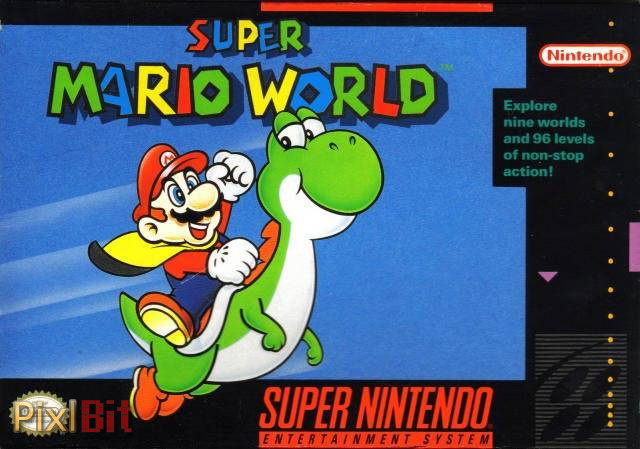
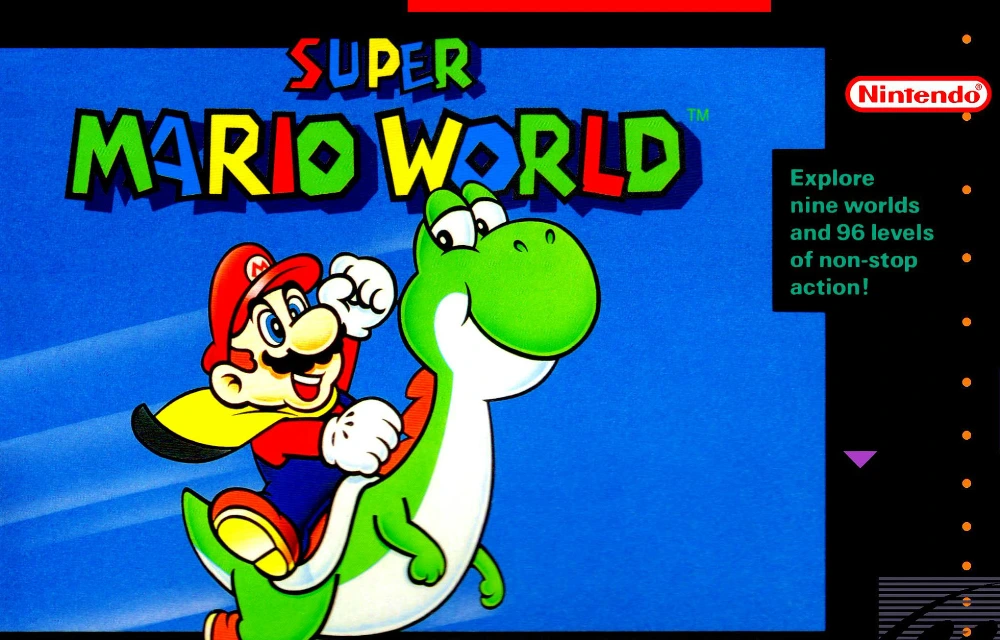
Witnessing the leap from the NES to the new 16-bit Super Nintendo in 1991 was downright magical. The console had an eye-catching futuristic design (in the eyes of my six-year-old self anyway), and the hardware produced higher-quality graphics and sound that delivered an experience impossible for the previous generation. And what better title to lead the charge than Super Mario World? I remember seeing the game for the first time at a graduation party for a friend going to middle school. We all huddled around her TV, taking turns playing the game. As soon as that giant Banzai Bill streaked across the screen, I was hooked.
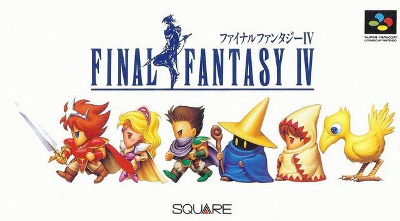
Today marks the 30th anniversary of Final Fantasy IV. Originally released on July 19, 1991, it was a momentous event due in no small part to the fact that this was the first in the series to debut on the Super Famicom. It was released to critical acclaim, and once again several months later when it came to the US on the Super Nintendo as Final Fantasy II (since we missed the first two sequels on the NES). Unfortunately, I didn’t get to play it until a decade later, when it was re-released as part of Final Fantasy Chronicles. And although I was late experiencing my first 16-bit RPG, it was undoubtedly worth the wait.
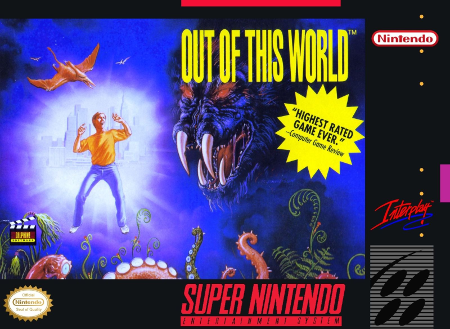
Out of this World (aka Another World) was initially developed and released for the Amiga and Atari ST personal computers by French game designer Eric Chahi in 1991. The game was later ported to the Super Nintendo, among other home consoles. Out of this World garnered much praise for its intriguing visual style and storytelling ability. In most games from this era, text or dialogue was usually the vehicle used to drive the story forward. But this one did it differently. Instead, the ever-changing situations, dangers, and victories all worked together to tell the story without a word.
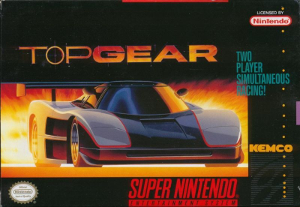
Ever since Namco’s Pole Position made its debut in the arcades in 1982, the racing genre has been considered an essential medium in the gaming world. The increase of video game consoles making their way into homes throughout the mid-to-late ’80s further solidified the popularity of racing games. Players looking for deeper mechanics than what was available from the current offerings of the day could rejoice when Kemco published Top Gear in 1992- one of the first driving games for the Super NES.
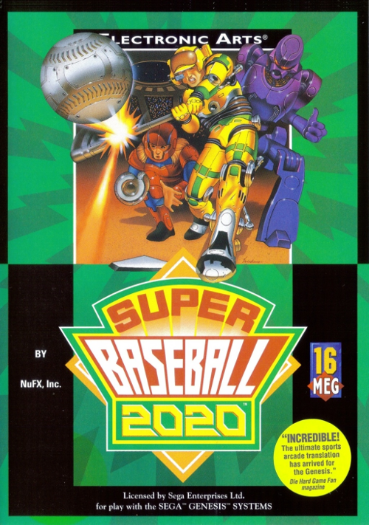
With the year 2020 and the MLB World Series well underway, there’s no better time than now to talk about Super Baseball 2020. In 1991, SNK- the famed developer of such blockbusters as Metal Slug and Aero Fighters- released their spin on America’s favorite pastime in the arcades. Two years later, it was ported to the Sega Genesis with NuFX and Electronic Arts handling the programming and publishing. With its futuristic setting and easy controls, the game offered a level of enjoyment missing from baseball’s more realistic interpretations on the home console platform.
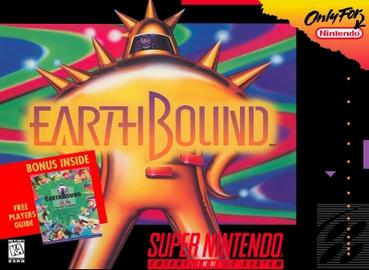
Remember that silly old trope in teen movies where the nerdy “plain Jane” character magically becomes super attractive just by removing her glasses? It was a bit like that with EarthBound- an RPG that was largely ignored when released on the Super NES in its twilight years. Nintendo’s ill-conceived ad campaign telling the player that “this game stinks” didn’t do it any favors either. The game’s overtly humorous kid-friendly facade was unusual for its time and quickly written off as ugly and boring by all but the most accepting of RPG fans. But thanks to the positive praise in gaming forums years later, it picked up steam and eventually became lauded as one of the best on the Super NES. Much like the bespectacled character in every 90s teen comedy, it was as if EarthBound removed its glasses. Nothing was different about it- just our perception of what was already there.
The early R-Type series was one of the biggest icons during the shoot ‘em up genre’s younger years. After the success of the original arcade game, Irem followed up with R-Type II in 1989. It featured slightly prettier graphics, more power-ups, and an upgraded wave cannon. Two years later in 1991, the game was remade as Super R-Type for the Super Nintendo-- one of the first games for the system.
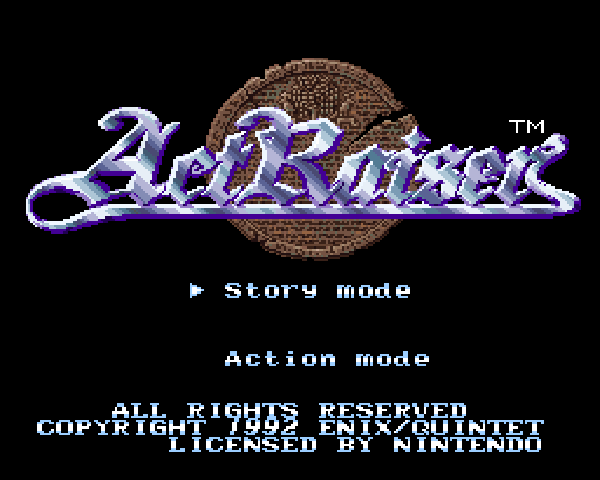
By the time the Super Nintendo was introduced, games that combined multiple genres were nothing new. Games like The Legend of Zelda, Crystalis, and The Guardian Legend were outstanding pioneers of the action/adventure variety. But developer Quintet partnered with Enix to publish ActRaiser in 1991 on the Super NES. Released just 3 months after the new home console, it was one of the earliest post-launch SNES games. Particularly outstanding is that it combines side-scrolling action with building simulation gameplay elements. Usually, building simulations send me running for the hills because I'm terrible at them. But after spending a little time with the game, I was able to put my fears aside.
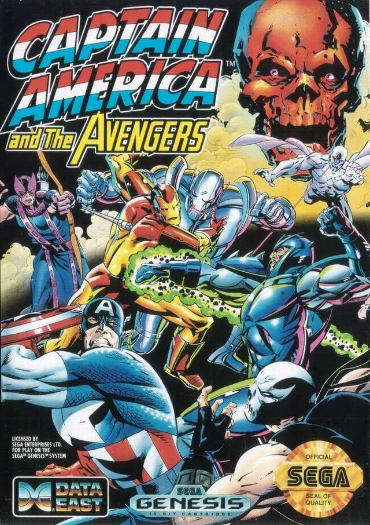
As a small fledgling in the first grade, I liked comic books superheroes, but I wasn’t nearly as familiar with them as I am now. Sure, I knew about guys like Superman, Batman, and Spider-Man. But for the most part, I had only a narrow understanding of the world of comic books and the heroes within them.
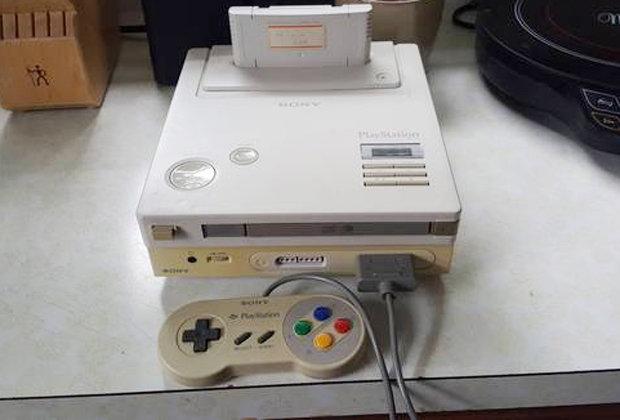
It's no secret that Sony originally intended to produce a CD-ROM attachment called the Play Station for the Super Nintendo console. Somewhere along the line the deal went sour and what was originally intended for the CD-ROM drive became the Sony PlayStation.
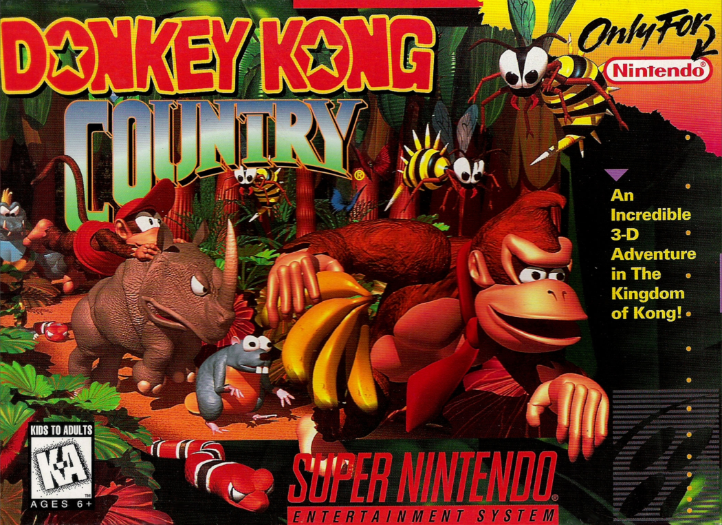
Back in 1994, Rareware breathed new life into Nintendo’s arcade game antagonist Donkey Kong with revolutionary pre-rendered graphics and created Donkey Kong Country for the SNES. Despite the pretty looks, it is a solid side-scrolling platformer with great controls, organic level design and a superb soundtrack.
In the early ‘90s, a new video game console was only as strong as its launch titles. When we look back at a console’s history and wonder what attracted us to it, often it’s those first games that we think of and say, "that’s why I fell in love with that system." Nintendo understood this concept when they released the Super Nintendo. Included among a shortlist of launch games was the flight simulation, Pilotwings. Beginning as an early tech demo in 1988 to show off the Mode 7 graphical capabilities of the 16-bit system, Pilotwings was developed into a full-fledged game that allowed us to take to the skies in a way never before possible on a home console.
Welcome to the second part of our exhaustive look at the history of Final Fantasy! In the first edition, we looked at the birth of a role playing series that would go on to capture the hearts and minds of millions of gamers worldwide and the man behind that idea-Hironobu Sakaguchi. This time we move into the 16 bit era, a time when the Final Fantasy franchise truly took its place on the world stage of RPGs. So please join us as we delve into the Super Famicom Years.
Ladies and gentlemen, welcome to the 90s. In this era we saw many things; we saw the true start of the (in)famous 16-bit console wars, the slow decline of arcades, the invention of CD-ROM media and the start of a tradition with mainline Mario titles. Thought it was nice the NES had three great Mario games? You are not going to see that again for a very long time. Make that nineteen years to be exact. Take a good long look over this fourth Mario Mania entry, because the 2-D Mario platforming ship is sailing and it feels like a bittersweet moment.
The calendar says it's Friday and you know what that means. That’s right; it’s time for another fantastic installment of Missing in Action!
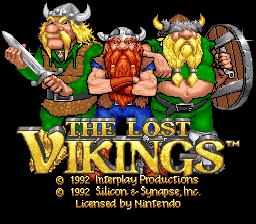
When talking about Blizzard Entertainment, it’s almost impossible to imagine the company before the creation of their core pillars of Warcraft, Starcraft, and Diablo. It’s even more difficult to think of the company making games for home consoles, but in the early 90s both of these unimaginable things were true. Under the original company name of Silicon & Synapse, the house that would be Blizzard produced The Lost Vikings—a beloved side-scrolling puzzle game that fell by the wayside for juggernauts like Warcraft. We have some love for those quirky Vikings around here, so it was high time for them to get their very own MIA.
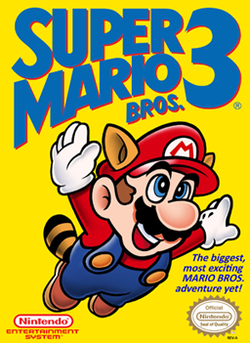
The year was 1990. It is about a year before the Super Nintendo makes its debut, but the NES is enjoying brisk sales of both hardware and games. The previous year Nintendo released its first handheld system, the Game Boy, and unleashed the addiction known as Tetris. This was, however, in North America. As I eluded to in Mario Mania #2, a Famicom player often had a different, exclusive set of hardware to play with than his counterpart in North America. The Japan-only accessory, the Famicom Disk System, was one of them.
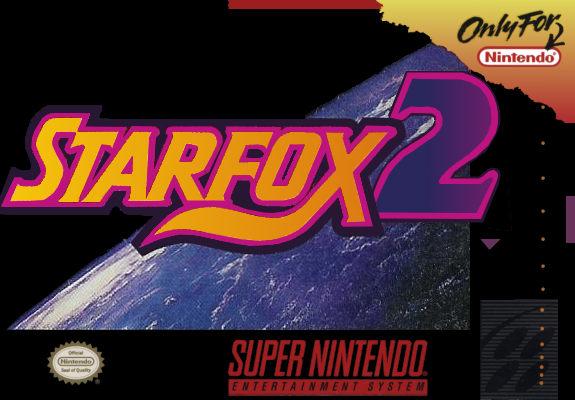
Shigeru Miyamoto has become quite well known for his outstanding games and their absolutely unique designs. He has led countless projects and played a major role in the runaway success of Nintendo since the introduction of the NES. However, he's also the reason Star Fox 2, a fully completed game, has never seen the light of day.
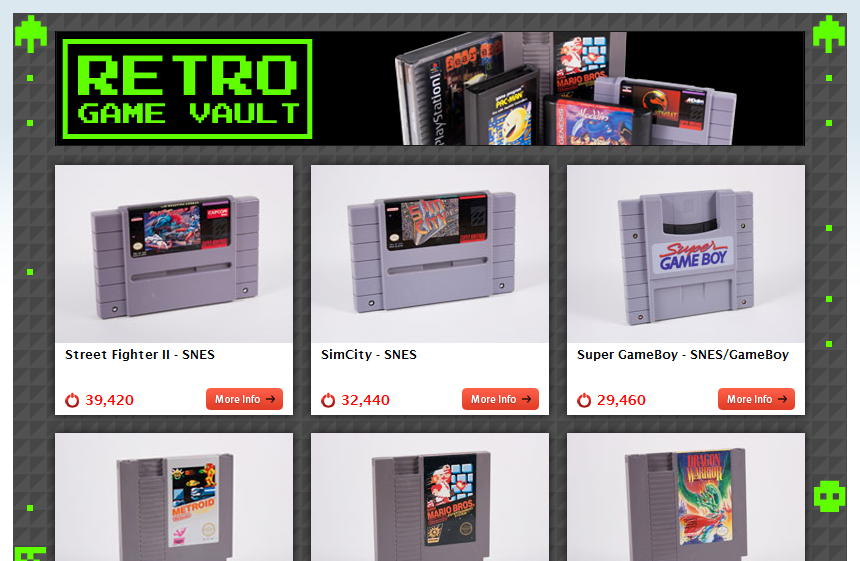
Visitors to GameStop’s PowerUp Rewards website may have noticed a new section called the Retro Game Vault. It would appear GameStop is getting into the business of selling classic games for reward points for systems dating all the way back to the Atari 2600. There are even some accessories listed for future availability such as the Nintendo Power Pad and the infamous NES Power glove, which come with World Class Track Meet and Super Gloveball respectively.